
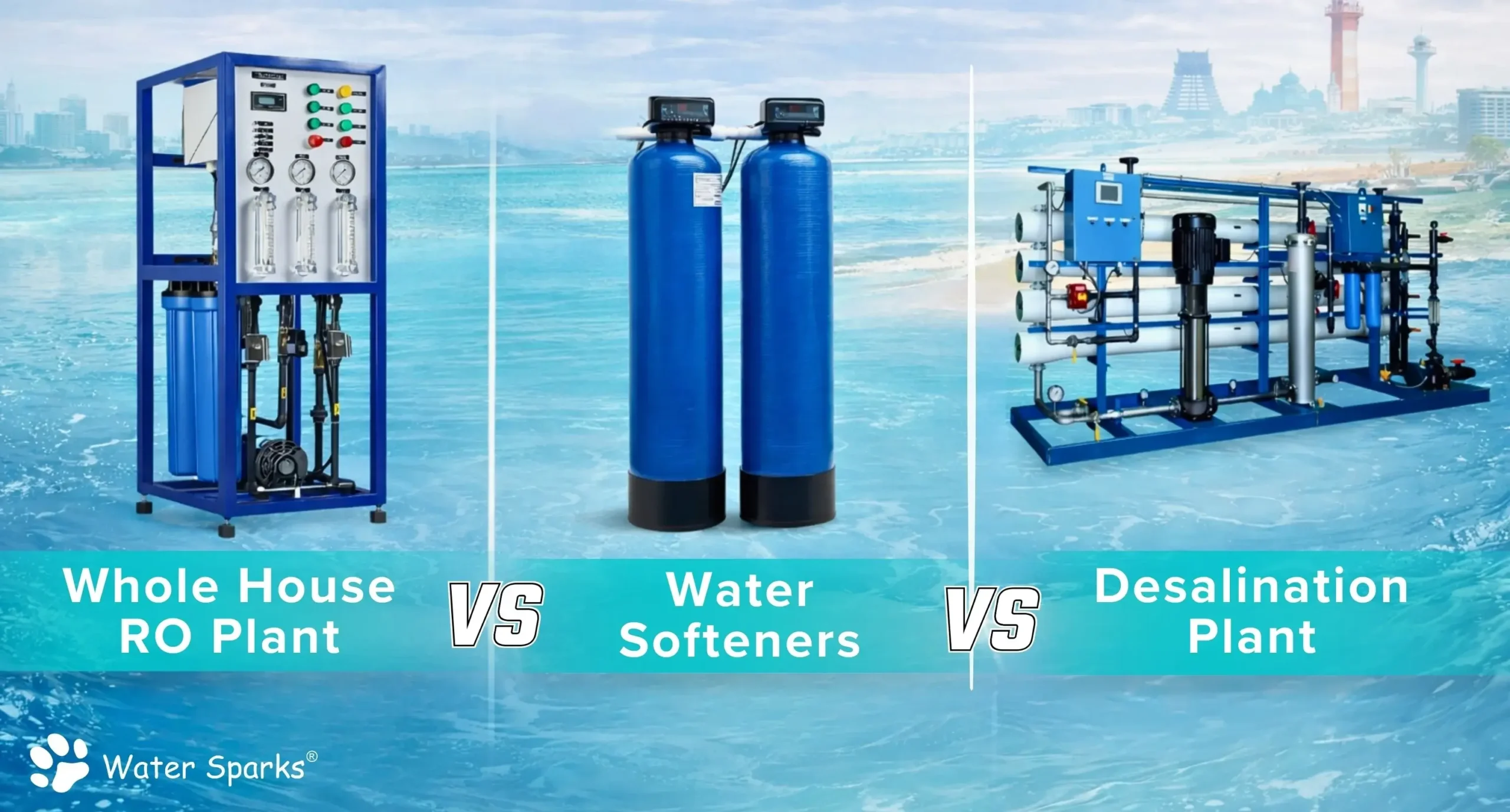
Should I Install a Whole House RO Plant, Softener, or Desalination Plant in Chennai?
Choosing between an Whole house RO plant, a whole house water softener, or a desalination system isn’t about picking the fanciest or most expensive option; it’s like picking the right key for a lock. The right system depends entirely on the type of water you have and the problems it carries. In Chennai, water is a little like a box of chocolate; every source is different. Borewell water might be loaded with minerals, metro water can carry chemicals, and coastal water may taste like the sea itself.
To find the perfect fit, the first step is always water testing. Think of it as taking a magnifying glass to your water, seeing what’s hiding beneath the surface. Once you know whether your water is hard, salty, high in TDS, or carrying metals and bacteria, choosing the right treatment system becomes as simple as matching the shoe to the foot. The result is water that’s not only safe to drink but also gentle on your appliances, pipes, and family.
Chennai Home Water Sources Decoded: Borewell, Metro Water & Tanker Supply
Chennai homes get water from different sources, and each comes with its own set of challenges:
- Borewell Water: Often high in TDS, hardness, iron, and sometimes salinity, which can cause scaling, metallic taste, and pipe corrosion.
- Metro Water: Chlorine-treated but may contain microplastics, rust from old pipes, or residual chemicals, affecting taste and safety.
- Tanker Water: May carry sediment, bacteria, and varying levels of contamination, making it unpredictable for daily use.
- Rainwater: Naturally soft and low in minerals, but can harbour microbial contamination if not properly stored or filtered.
Chennai Water Problems Explained: Hidden Damage to Pipes, Appliances & Buildings
Untreated water can be a quiet thief in your home; it may seem harmless at first, but over time, it can damage your home and your health. Many homeowners don’t realise the hidden problems until the effects become visible or costly. Here’s how untreated water can create trouble:
- Hard Water (High Minerals): Acts like sandpaper inside pipes, geysers, and appliances, leaving behind scale that reduces water flow, lowers efficiency, and increases electricity bills.
- High Salts or Dissolved Solids: Gradually erode your taps, showerheads, and pipes, making them look worn over time.
- Iron and Manganese: Leave stubborn brown or yellow stains on tiles, sinks, utensils, and clothes, and can block pipes like mud piling up over time.
- Salinity (Salt in Water): Weakens metal fittings and concrete, causing slow erosion that damages your home's structure.
- Sulphates and Chlorides: High levels of sulphates and chlorides in water can make it taste salty or bitter and may cause gradual damage to pipes and fittings.
- Unpleasant Taste or Smell: When sulphates and chlorides are high, water may have an unusual taste or smell, making drinking and cooking less pleasant and reducing daily comfort with water use.
Beyond damage to your home, untreated water also affects your body: dry, rough skin, brittle hair, digestive discomfort, and reduced overall well-being. It’s like a slow leak that weakens your home and health at the same time.
Must-Check Water Quality Parameters for Every Chennai Household
- TDS (Total Dissolved Solids): Measures all dissolved salts and minerals in water, indicating overall water purity.
- Hardness: Indicates calcium and magnesium levels that cause scaling and soap inefficiency.
- Iron and Manganese: Metals that cause brown or yellow water, metallic taste, stains, and pipe blockages.
- Salinity: High salt content that affects taste, corrodes pipes, and damages appliances.
- Chlorine: Used in municipal water treatment; excess can affect taste, smell, and skin.
- Fluoride: Essential in small amounts but harmful in excess, affecting teeth and bones.
- Nitrates: High levels are harmful to health, especially for infants and pregnant women.
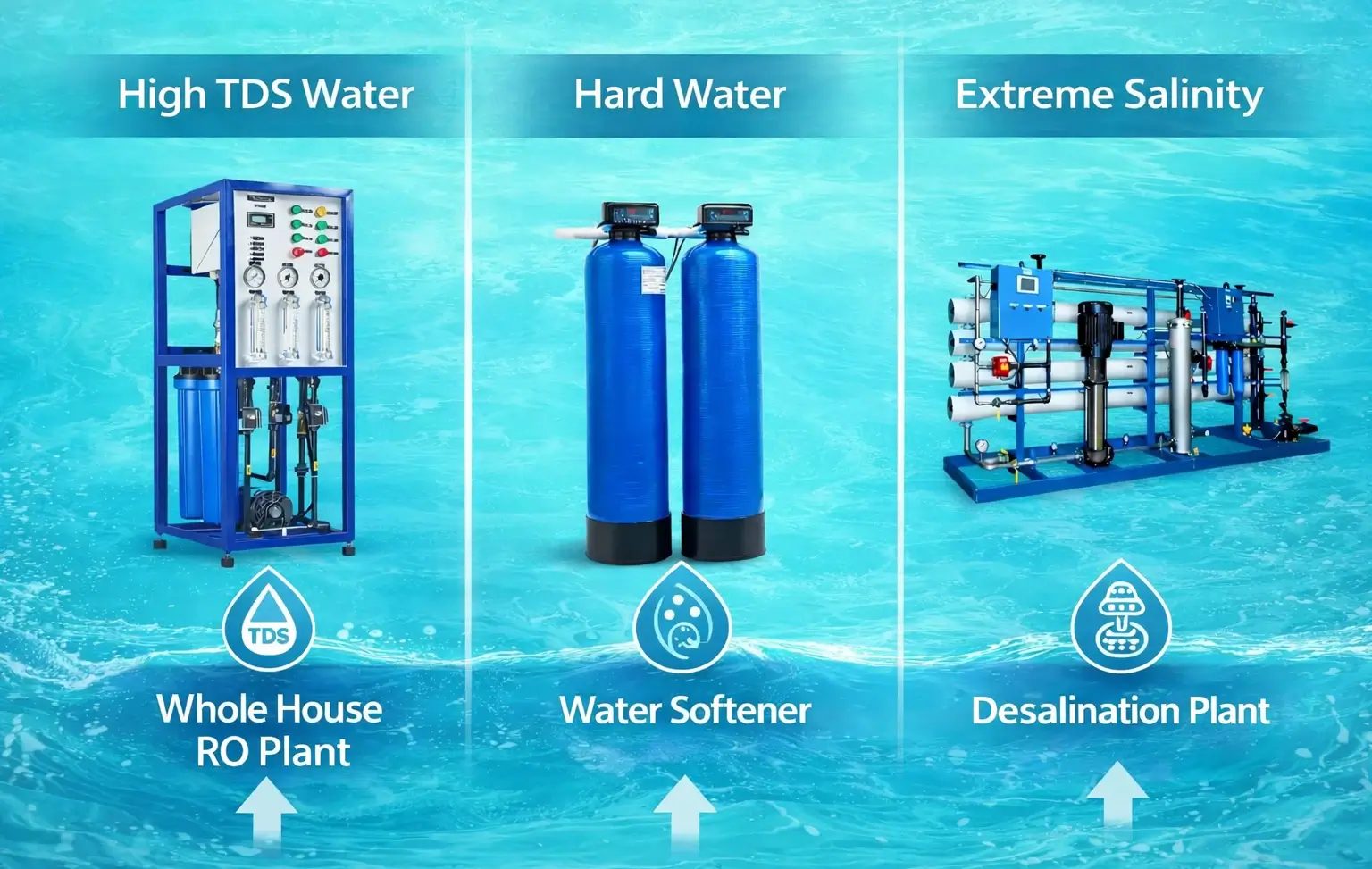
The Real Impact of High TDS and Hard Water in Chennai Homes
Chennai’s water is not the same everywhere, and that’s exactly the problem. Many homes depend on borewell water, which often contains high levels of dissolved salts, calcium, magnesium, and sometimes iron. This results in high TDS and hardness, two of the most common water quality issues in the city.
Hardness caused by excess calcium and magnesium forms white scale on taps, blocks showerheads, damages geysers, and reduces washing machine efficiency. Over time, scaling builds up inside pipes, increasing maintenance costs and shortening appliance lifespan.
High TDS is another major concern. In coastal areas, seawater intrusion increases sodium and chloride levels, making the water salty and corrosive. Even in non-coastal areas, dissolved salts, sulphates, and other minerals raise TDS levels. This can cause bitter taste, utensil stains, pipe corrosion, and long-term plumbing damage.
Metro water and tanker supplies are not always consistent, either. Blended sources can increase mineral content, making hardness and TDS unpredictable.
In Chennai, high TDS and hardness aren’t minor inconveniences; they directly affect your home, appliances, and daily water use.
Choosing the Right Water Treatment System in Chennai: RO, Softener or Desalination Plant?
There is no single water treatment system that works for every home in Chennai. Some houses struggle with hard-water scaling, while others deal with high TDS borewell water or extreme salinity. Installing the wrong system can either fail to solve the issue or lead to unnecessary expense. The right solution depends entirely on your water quality.
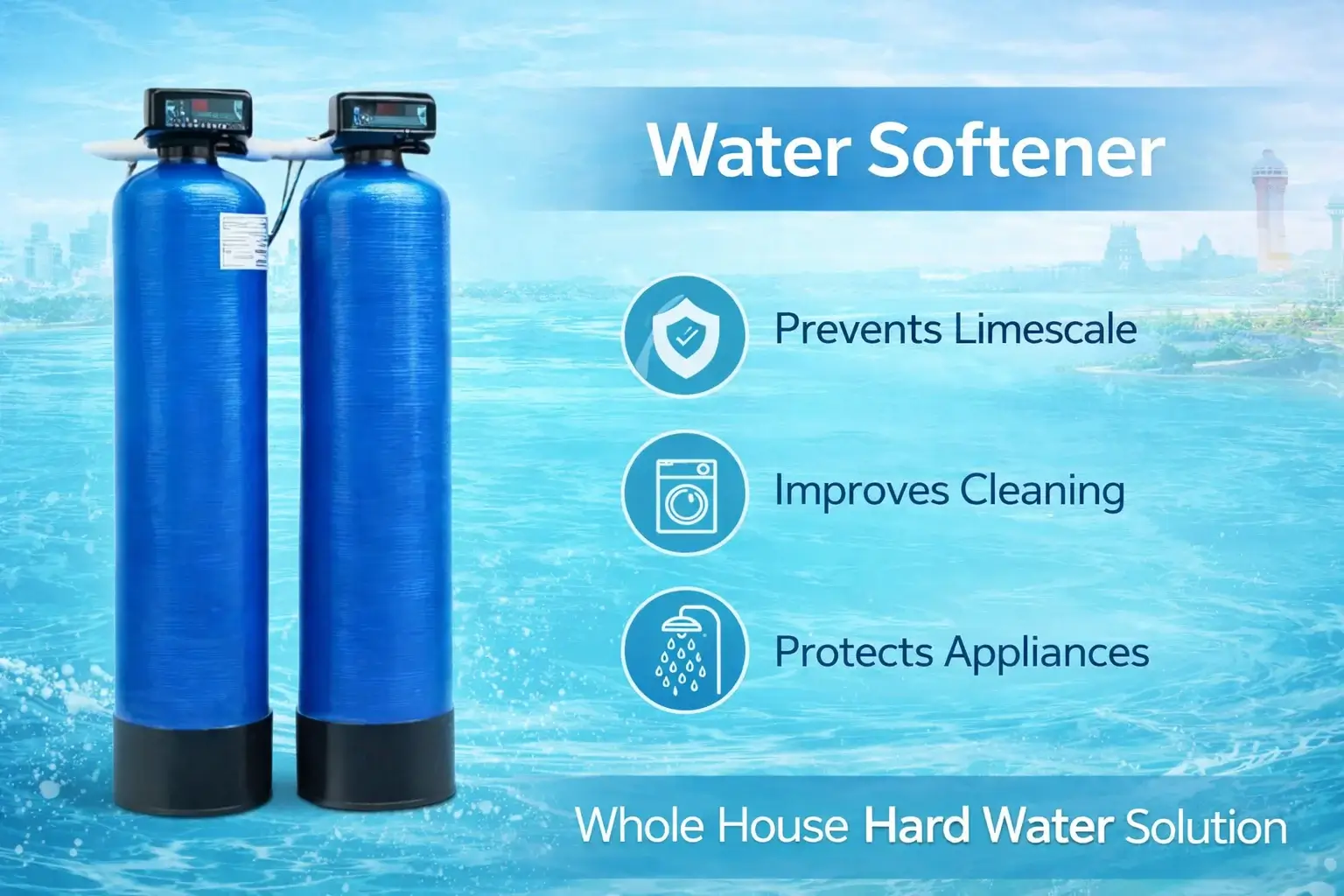
Whole House Water Softener – For Hard Water
If your water is high in calcium and magnesium (hardness above 200-300 ppm), the best option is a Whole House Water Softener. Hard water is a common problem in many areas of Chennai, including Porur, Iyyappanthangal, Poonamallee, Tambaram, Medavakkam, Pallikaranai, Perumbakkam, Madhavaram, Red Hills, and parts of Ambattur, where borewell water is high in calcium and magnesium.
Even Metro water in Chennai sometimes becomes a cause of concern. During water shortages, mixed sources, desalination, or fluctuations in water levels may result in moderate hardness in certain areas. Even Metro water sometimes causes scaling in geysers and faucets after a certain period of time, when mixed with borewell water in apartments or independent houses.
Signs of hard water include white scale on taps, poor soap lather, dry skin, stiff clothes, and reduced efficiency of geysers and washing machines.
A water softener removes only calcium and magnesium, which are the minerals responsible for hardness. It reduces hardness by 90–100% and completely prevents scaling in pipes and appliances. However, other dissolved salts will remain in the water, and the total dissolved salts will not significantly affect the TDS. If your TDS is normal and the only problem is hardness, a water softener alone will be enough. It is always best to install it early to avoid damaging pipes and costly repairs.
Whole House RO Plant – For High TDS Water
When TDS exceeds 500 ppm, which is common in Chennai borewell water, a Whole House RO Plant becomes necessary. In coastal areas, seawater intrusion can mix with groundwater, especially near the coast or in areas with excessive borewell pumping that lowers groundwater levels. This is a common phenomenon in regions such as ECR, Neelankarai, Injambakkam, Besant Nagar, Thiruvanmiyur, and other coastal areas. When seawater seeps into the borewells, the levels of chloride, sodium, and sulphate rise, resulting in salty, corrosive water. [1]
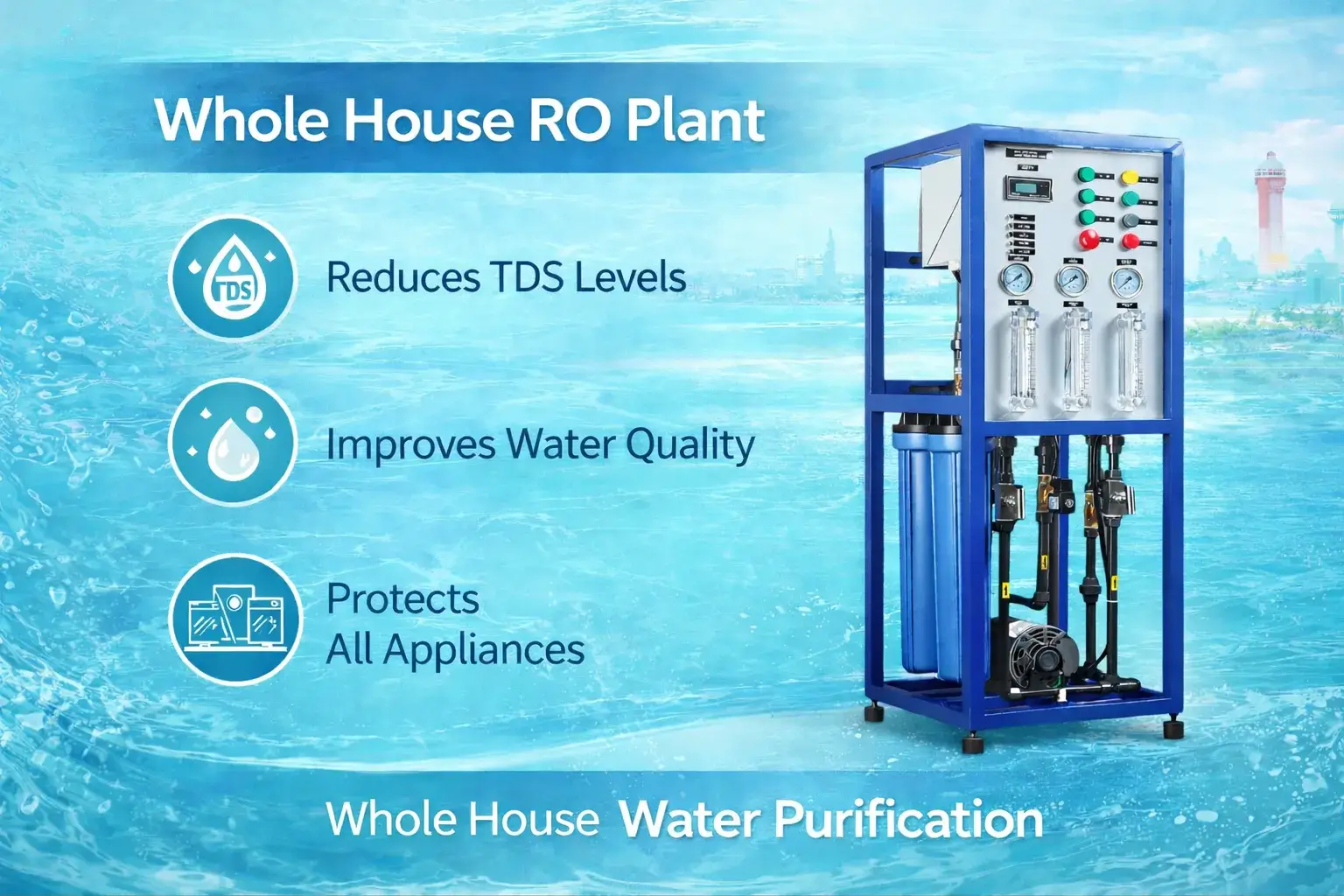
The RO system removes dissolved salts, including chlorides, sulphates, sodium, calcium, magnesium, and other minerals, as well as heavy metals and chemical contaminants, reducing TDS by 85-95%.
If your water tastes salty or bitter, leaves stains on utensils, corrodes pipes, or poses a health hazard, it is time to install an RO system. The RO system provides clean water for drinking, cooking, and even whole-house use if properly designed.
Desalination Plant – For Extremely Saline Water
In coastal areas, water TDS can range from 2000 to 10000+ ppm, mainly due to seawater intrusion into borewells. This significantly increases salts such as sodium, chloride, sulphate, bicarbonate, and other dissolved minerals. High chloride and sodium levels make the water extremely salty, corrosive, and damaging to plumbing systems. Over the years, such water can corrode pipes, damage geysers, shorten the lifespan of washing machines, and even affect concrete structures.
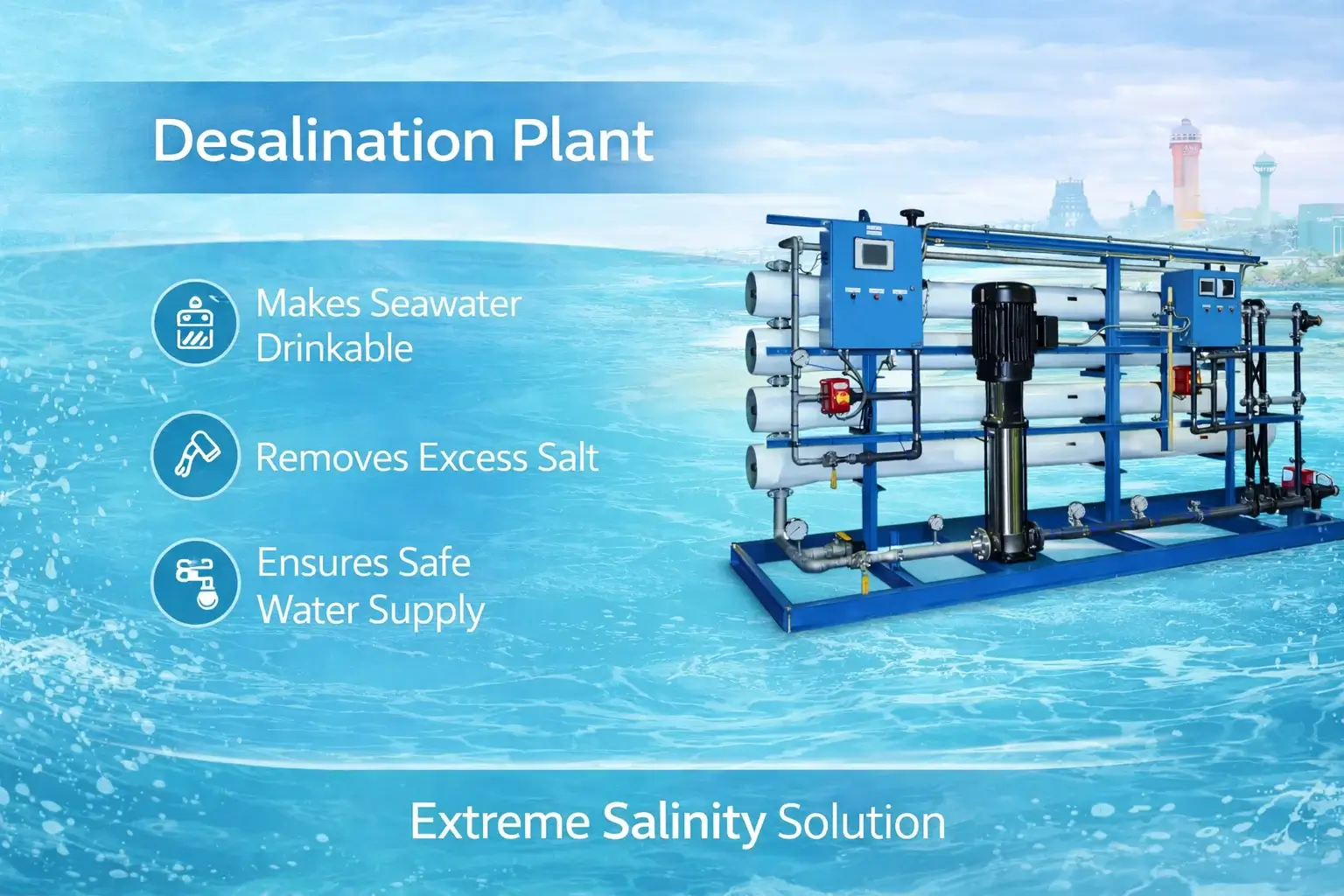
The salinity levels are so high that a conventional water softener will be ineffective, as it removes only calcium and magnesium (hardness) and does not reduce the overall TDS/salinity. A conventional RO plant will also be of little use; it is designed to handle TDS levels up to 2000 ppm, but high salt levels can cause constant membrane damage.
This is where a Desalination Plant comes into the picture. These plants, designed for high-salinity water, can reduce TDS by 98-99%, removing excess sodium, chloride, sulphate, and other dissolved salts. Having such a plant in place at an early stage will protect your pipes, appliances, and even your structure. [2]
When Is the Right Time to Test Your Home Water in Chennai? Key Signs You Shouldn’t Ignore
Water testing should be conducted before installing any water treatment system to ensure you select the right system for your home. After installation, it’s a good idea to test water every 6–12 months to check for changes in hardness, TDS, or other impurities. Testing is especially important after the monsoon, when borewell and groundwater may carry higher levels of sediment or microbes. You should also test water whenever you notice changes in taste, smell, or colour, as these are signs that something in the water has changed. Regular testing helps ensure your system continues to provide safe, clean, and consistent water while protecting your pipes, appliances, and family’s health. [3]
Complete Water Treatment Solutions Tailored for Chennai Homes
Professional water treatment providers design systems based on lab-tested results of your water. Every home’s water is different, so no two solutions are exactly the same. Sometimes, a single system, such as a Whole House water softener or a whole house RO plant, is sufficient to resolve the issue. In many cases, a combination of systems works best. For example, a whole house water softener can handle hardness across all taps, while a separate drinking-water RO plant ensures safe, low-TDS water for cooking and drinking.
A properly designed water treatment system ensures multiple benefits:
- Long-term appliance protection: Prevents scaling, corrosion, and mineral buildup in geysers, washing machines, taps, and pipelines, extending their lifespan.
- Consistent water quality: Maintains a consistent level of soft, clean, and safe water across all outlets, ensuring every tap delivers reliable quality.
- Lower maintenance costs: Reduces repairs, replacements, and chemical cleaning for appliances and plumbing due to hard or contaminated water.
- Safe drinking water: Ensures that water for drinking and cooking is free from harmful salts, heavy metals, fluoride, nitrates, or microbial contamination.
In Chennai, where water quality varies by area, borewell, metro supply, coastal intrusion, or tanker water, customisation is key. A system tailored to your home’s specific water characteristics not only addresses current issues but also prevents future problems, providing peace of mind, health protection, and long-term efficiency.
Why Homeowners Across Chennai Trust WaterSparks for Reliable Water Treatment
WaterSparks provides customized water treatment solutions tailored specifically for Chennai’s water conditions. With over a decade of expertise and correctly sized systems, WaterSparks ensures every home gets the right plant, not the most expensive one, but the most suitable one.
From whole house water softeners and Whole House RO plants to high-capacity desalination systems, WaterSparks offers installation and maintenance. The focus is on delivering safe, soft, and reliable water while protecting your home, appliances, and family health.
Frequently Asked Questions – Whole House RO, Softener & Desalination in Chennai
Which water treatment system is best for Chennai homes?
The best water treatment system for a Chennai home depends on water quality. A whole house water softener is ideal for hard water, a whole house RO plant is suitable for high TDS water, and a desalination plant is required for extremely saline coastal borewell water. Water testing is essential before choosing.
When should I install a whole house RO plant in Chennai?
You should install a whole house RO plant when your water TDS exceeds 500 ppm or when water tastes salty or bitter. This is common in Chennai borewell water, mixed Metro water, and coastal areas affected by seawater intrusion.
Is a water softener enough for hard water in Chennai?
Yes, a whole house water softener is enough if the main issue is hardness caused by calcium and magnesium. It prevents scaling, protects appliances, and improves bathing and washing. However, it does not reduce TDS or salinity, so it is not suitable for salty or high TDS water.
What is the difference between an RO plant and a desalination plant?
A whole house RO plant is designed for high TDS water up to around 2000 ppm, while a desalination plant is built for extremely saline water above 2000 ppm. Desalination plants remove very high levels of sodium and chloride commonly found in coastal Chennai borewells.
Why is water testing important before installing any system?
Water testing identifies key parameters such as TDS, hardness, salinity, iron, and contaminants as per BIS (IS 10500) standards. Installing a system without testing can lead to poor performance, higher costs, and incomplete treatment of Chennai water problems.
How often should Chennai homeowners test their water?
Water should be tested before installation, then every 6–12 months, and after monsoons. Testing is also recommended if you notice changes in taste, smell, colour, or scaling in appliances.