
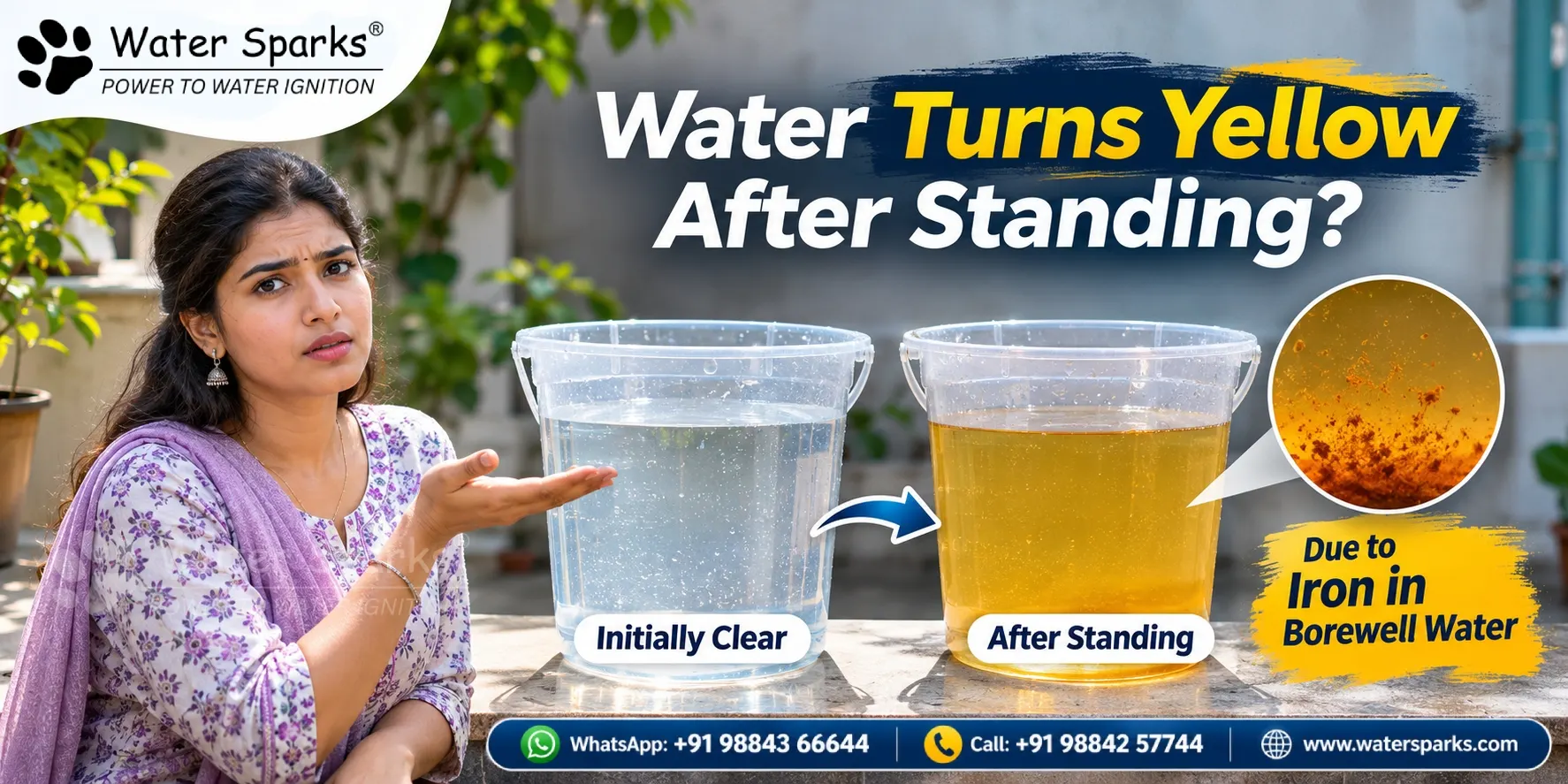
Water Turns Yellow After Standing in a Bucket? Why?
Have you ever experienced water turning yellow after standing in your bucket and wondered why that happens? Water, which is initially clear, turns yellow after standing because it contains dissolved iron. When the water is exposed to air in the bucket, the iron oxidises into yellow-brown particles, which deposits at the bottom. This water is not very healthy for daily use. An iron removal plant for home takes the iron out before it reaches your taps.
Water Turns Yellow After Standing: What Causes It?
Yellow water is a common water quality issue in homes and commercial buildings. The cause is dissolved iron in borewell water, which is very common. Straight from the tap the iron is invisible, but after anywhere from 30 minutes to a few hours in contact with air it oxidises and turns the water yellow. This with corroded pipes which bring rust and dissolved sediments worsen the water quality. Identifying the causes for water turns yellow after standing and rectifying it in the early stages brings relief to you and your home.
What Is the Difference Between Ferrous and Ferric Iron?
Ferrous and ferric iron differ mainly in their oxidation state, solubility and how they appear when they are left standing. Ferrous iron dissolves in water and can’t be seen, which is why the water looks clear from the tap. Iron oxidation in water turns it into ferric iron, which doesn’t dissolve. That’s what shows up as yellow-brown colour and sediment.
What Does Yellow Water in a Bucket Do to Your Home?
Left untreated, it stains buckets, tiles, washbasins, toilets and clothes orange-brown. It also clogs taps and shower heads with iron deposits and leaves rusty sludge in tanks. Yellow water in the bucket disturbs the aesthetics of the bathroom, you worked very hard to build. It also frequently causes plumbing issues and appliance damage. In addition, it also causes skin and hair damage.
How Does an Iron Removal Plant for Home Stop Yellow Water?
Iron in borewell water is very commonly found in areas like Chennai. Hence, an iron removal plant for home becomes an essential commodity to remove iron from your water. The plant oxidises the dissolved iron and filters out the particles before the water reaches your overhead tank. Water then stays clear even after standing for hours.
How Does an Iron Removal Plant Work, Step by Step?
In short there are three stages. First, oxidation turns the dissolved iron into particles. Second, a filter media bed traps those particles. Third, the plant backwashes automatically to flush the trapped iron out.
The step by step process in detail are:
Oxidation : Borewell/ groundwater contains dissolved ferrous (fe2+) iron. The iron removal plant exposes this water to air via aeration tanks. When exposed to air the ferrous turns into the insoluble ferric (fe3+). The insoluble ferric iron then settled down in a dedicated chamber.
Filtration: The unwanted particles and debris are filtered out through the special media beds and only clean water is stored on your overhead tanks. This has two filters, a dual media filter and multigrade filter.
Backwashing: As the name suggests, water flows in a backward direction to expand the media filter washing the accumulated rust and sediment.
Frequently Asked Questions About Yellow Water
Why is my water clear from the tap but yellow later?
Water that looks clear at first and later develops a yellow colour after standing is mainly due to dissolved ferrous iron reacting with oxygen. The answer is iron oxidation in water. Water turns yellow after standing because of minerals in the water too. The iron and manganese are very common in borewell water, which leaves rust stains after sitting for too long.
Ferrous iron + oxygen = ferric iron ( yellow colour).
How long does it take for water to turn yellow after standing?
Water turns yellow after standing, a few minutes or a few hours later, depending on the minerals present in them and how well they are exposed to air or kept in the open. An iron removal plant for home can remove all the iron that is causing yellow water and safe water can reach your taps.
Is yellow water caused by iron safe for bathing and washing?
Yellow water caused by iron is not automatically unsafe for bathing or washing, but it may stain clothes, bathroom tiles, sinks and plumbing fixtures. The colour alone cannot establish whether the water is safe. Laboratory testing for iron, manganese and other relevant contaminants is recommended before determining its suitability for household use.
Will yellow water stain my clothes and tiles?
Yes, washing your clothes regularly in yellow water causes stains in your laundry and yellow water also damages bathroom tiles. Fabrics can feel rough or weaken over time due to mineral buildups. The discolouration on bathroom tiles and faucets becomes hard to clean as time progresses.
How can I remove iron from borewell water at home?
An appropriately designed iron removal plant for home use can reduce dissolved iron in borewell water through oxidation and filtration. The system converts soluble iron into particles and captures them using suitable filter media. Regular backwashing removes accumulated deposits. The treatment method should be selected based on laboratory water test results.
How long does it take to install an iron removal plant?
Installing an iron removal plant for your residence does not take very long. It can take from 2-6 hours for a professional setup. These 2-6 hours can be a great investment for the future where you will not have a yellow water problem.
What is the acceptable iron level in drinking water according to BIS?
According to BIS IS 10500:2012, the acceptable limit for iron in drinking water is 0.3 mg/L, with no relaxation specified. Iron concentrations above this level can cause discolouration, unpleasant taste and staining. Testing water at a laboratory helps determine the iron concentration and appropriate treatment requirements.
Can an iron removal plant prevent water from turning yellow after standing?
Yes. A properly designed and maintained iron removal plant can significantly reduce iron-related yellow discolouration by treating dissolved iron before water reaches the overhead tank or household taps. Its effectiveness depends on iron concentration, pH, water chemistry, filtration capacity and maintenance. Water testing is recommended to confirm treatment performance.
Does WaterSparks provide yellow water treatment solutions
Yes, WaterSparks offers customised iron removal plants for homes, apartments, commercial buildings and industries in Chennai and across India. These systems are designed to reduce dissolved iron in borewell water, helping prevent yellow discolouration, rust stains and iron deposits. WaterSparks recommends selecting the right treatment system based on water testing, iron concentration and daily water requirements.
Get a Free Quote for an Iron Removal Plant in Chennai
We are guessing you are having yellow water, rusty stains or unpleasant water quality at home, otherwise you would not have reached the bottom of this blog. Guess what? You are at the right place.
Water Sparks® offers a solution for businesses and property owners looking for iron removal plant solutions in and around Chennai. Choosing the right water treatment system can help address iron-related water quality issues and provide water that meets the requirements of your application.
Don’t let iron-related water discoloration and deposits go unaddressed. Request your free quote today and take the first step towards cleaner, clearer water with Water Sparks®.