
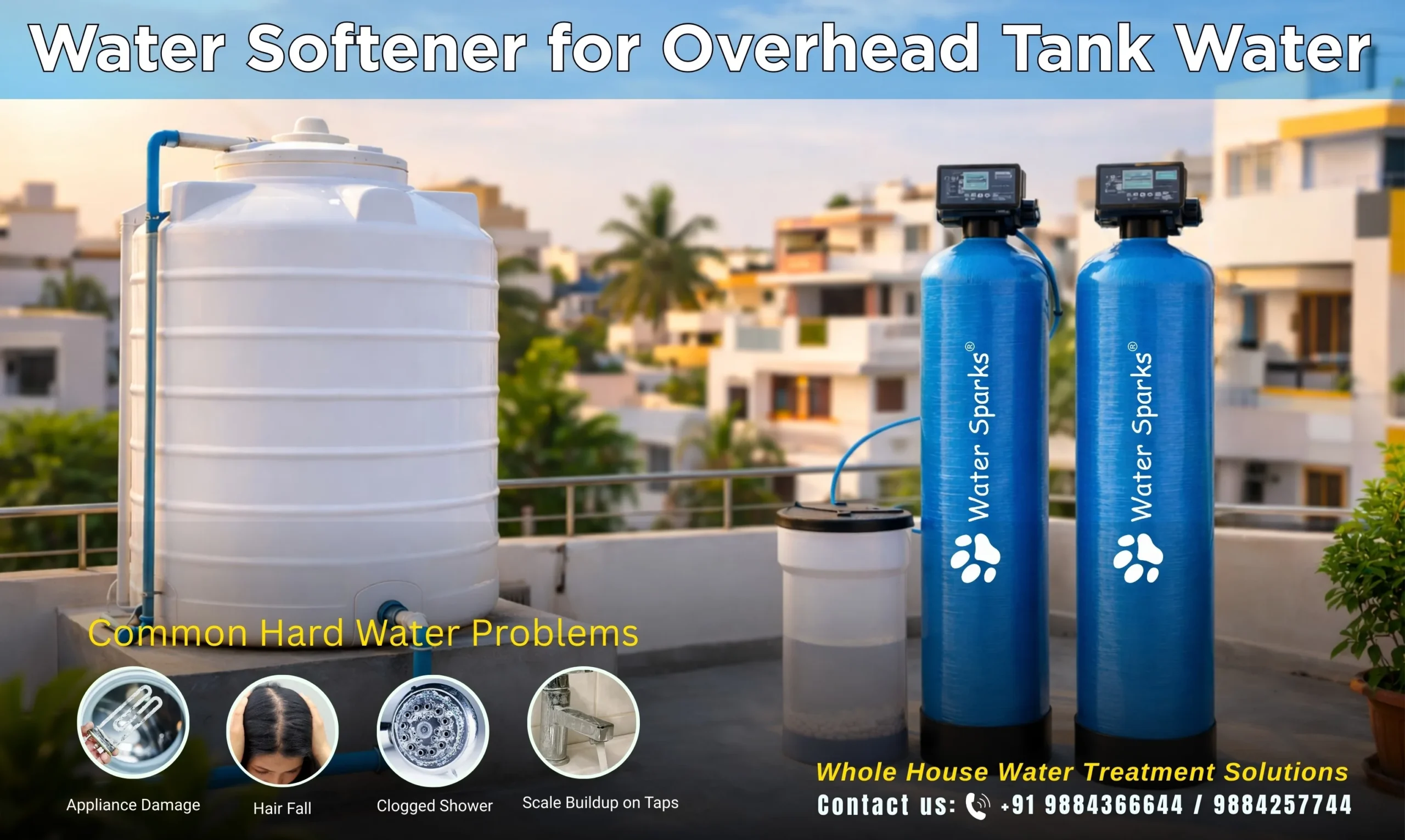
Why Chennai Homes Need a Water Softener for Overhead Tank Water
In many Chennai homes, the overhead tank serves as the final storage point for all the water your house uses. Whether the source is metro water, borewell water, or tanker supply, it eventually reaches the tank before flowing through your taps. But just like a storage box that collects dust over time, the water stored in overhead tanks can slowly accumulate minerals, making it hard and less suitable for daily household use.
Hard water in the overhead tank simply means the water contains high levels of minerals like calcium and magnesium. You may notice this when soap doesn’t lather easily, white stains appear on bathroom tiles, or kettles and taps develop chalky deposits. In a city like Chennai, where water sources vary widely, these minerals can easily enter the supply and travel straight to overhead tanks, making Hard water damage a common issue in many homes.
What is Hard Water?
Hard water is water that contains a high amount of dissolved minerals, mainly calcium and magnesium. These minerals naturally mix with water as it passes through soil, rocks, and underground layers before reaching homes. Even though the water may look clear, the presence of these minerals can change how it behaves in daily household use. Water hardness is usually measured in parts per million (ppm). In general, water with 0–60 ppm is considered soft, 60–120 ppm is moderately hard, 120–180 ppm is hard, and anything above 180 ppm is classified as very hard water. [1]
When water becomes hard, it can create small issues around the home. Soap may take longer to lather. White stains on taps and hard water stains on bathroom surfaces, and mineral deposits can slowly build up in pipes and appliances. In many areas where water flows through mineral-rich ground, hardness levels can easily exceed 200–300 ppm, making Hard water in the overhead tank a common concern in many households.
What Are the Common Signs of Hard Water in Chennai Households?
Soap doesn’t lather easily: When water is hard, soap and shampoo take longer to form foam, making bathing, washing hands, or cleaning utensils feel less effective.
White stains on taps and bathroom tiles: Hard water often leaves chalky white marks on faucets, showerheads, tiles, and sinks after it dries.
Scale buildup in kettles and heaters: You may notice a rough, white layer forming inside kettles, water heaters, or electric appliances that regularly heat water.
Clothes feel rough after washing: Laundry washed in hard water can sometimes feel stiff or less soft because minerals remain in the fabric.
Reduced water flow from showerheads and taps: Mineral deposits can slowly build up inside small pipe openings, which may reduce water pressure over time.
Spots on dishes and glassware: After washing, plates and glasses may appear slightly cloudy or spotted due to mineral residue left by Hard water damage.
Hard water stains on bathroom surfaces: Hard water can react with soap, leaving a thin, sticky film on sinks, bathtubs, and shower areas.

Key Water Quality Parameters to Test
Calcium Salts:
Calcium salts are among the main causes of Hard water in the overhead tanks in many households. When calcium levels are high, they can lead to White stains on taps, showerheads, pipes, and appliances over time.
Magnesium Salts:
Magnesium salts are another major contributor to water hardness. When present in large amounts, they reduce the effectiveness of soaps and detergents, making cleaning and washing less efficient.
Total Dissolved Solids (TDS):
TDS measures the total concentration of dissolved minerals and salts in water. A high TDS level usually indicates that the water contains multiple mineral salts that may affect overall water quality. [2]
Chloride Salts:
Chlorides are naturally occurring salts that may enter water through soil layers or groundwater sources. High chloride levels can affect the taste of water and sometimes contribute to corrosion in plumbing.
Sulfate Salts:
Sulfate salts come from natural mineral deposits in the ground. Testing sulfate levels helps identify the water’s mineral composition and assess potential impacts on household water use.
When Should Chennai Homes Test Water?
Chennai homes should consider testing their water whenever there are visible changes in water quality or daily usage problems. If you notice soap not lathering properly, white stains on taps and tiles, scale buildup in kettles, or a change in the taste of the water, it may be a sign that the water’s mineral levels have increased. Testing the water at this stage helps identify whether hardness or other dissolved salts are present in high amounts.
It is also good practice to test the water when moving into a new house, after installing a new borewell, or when the water source changes from metro water to tanker water or groundwater. Since different sources can have varying mineral levels, periodic testing helps homeowners understand their water quality and decide whether treatment solutions like filtration or softening are needed.
Common Problems Caused by Hard Water in Daily Household Use
- Soap and shampoo do not lather easily Hard water reacts with soap, making it harder to create foam. This can make bathing, handwashing, and cleaning feel less effective.
- White scale buildup on taps and showerheads Minerals in Hard water damage can leave behind chalky deposits on faucets, showerheads, and hard water stains on bathroom floors.
- hard water stains on bathroom tiles and sinks After water dries, it may leave white spots or streaks on tiles, basins, and glass surfaces.
- Clothes feel stiff after washing Hard water can leave mineral residue on fabrics, which may make clothes feel rough or less soft after laundry.
- Blockage in pipes over time Mineral deposits can slowly accumulate inside plumbing pipes, which may reduce water flow in some cases.
- Spots on dishes and glassware Plates, cups, and glasses may appear cloudy or spotted after washing due to leftover mineral residue.
- Reduced the efficiency of water heaters Hard water minerals can form scale inside heaters, which may affect heating performance over time.
How Hard Water Affects Pipes, Fixtures, and Home Appliances
Hard water in the overhead tank contains minerals such as calcium and magnesium that can slowly build up in household plumbing systems. Over time, these minerals form a chalky layer known as scale inside pipes, taps, and showerheads. Just as limescale forms inside a kettle, the same buildup can occur in water pipes, gradually narrowing the flow path and reducing water pressure.
Home appliances that regularly use water are also affected by hard water. Washing machines, water heaters, and dishwashers may develop mineral deposits on their internal parts, which can reduce their efficiency over time. This buildup can make appliances work harder than usual, which may affect their performance and increase maintenance needs in the long run.
Can a Water Softener Protect Plumbing and Appliances from Hard Water Damage?
A water softener for the overhead tank helps reduce water hardness by removing minerals such as calcium and magnesium before the water reaches household plumbing. Treating the water at the source helps prevent scale buildup in pipes, taps, and showerheads, allowing water to flow more smoothly through the plumbing system. Water softener for the overhead tanks generally work effectively when the hardness level is around 500–600 ppm, at which point the softener’s resin can efficiently remove hardness-causing minerals.
However, when the hardness level exceeds 600 ppm, as often occurs with certain borewell water sources, a standard water softener for the overhead tank may not fully treat the water. In such situations, a Reverse Osmosis (RO) plant becomes a more suitable solution, as it can remove a much wider range of dissolved minerals and significantly reduce both TDS and hardness levels, making the water more suitable for household use.
Why Choose Water Sparks® for Customised Whole House Water Treatment in Chennai
Solutions Designed for Chennai Water Conditions
Water Sparks® systems are designed keeping Chennai’s common water sources in mind, including metro water, borewell water, and tanker supply. This helps provide treatment solutions that match the actual water quality found in many homes.
Customised Whole House Water Treatment Systems
Instead of a one-size-fits-all approach, Water Sparks® offers systems tailored to each household’s specific needs, helping address problems such as hardness, sediment, and other water quality concerns.
Protection for Plumbing and Household Appliances
By treating water before it enters the home’s plumbing network, these systems help reduce mineral buildup in pipes, taps, water heaters, and other appliances.
Trusted Solution for Cleaner Household Water
With a focus on reliable filtration and treatment technologies, Water Sparks® aims to provide consistent water quality for daily household activities in homes across Chennai.
Frequently Asked Questions
What causes hard water in overhead tanks in Chennai?
Hard water in overhead tanks usually comes from the original water source. In Chennai, water supplied through borewell water, tanker water, or metro water may contain minerals like calcium and magnesium. When this water is stored in the tank and distributed throughout the house, these minerals can lead to hardness-related problems.
How can I tell if there is hard water in my overhead tank?
Common signs of hard water in the overhead tank include white stains on taps, hard water stains on bathroom tiles, soap that doesn’t lather easily, and scale buildup in kettles or heaters. These symptoms indicate that the water contains high levels of minerals that may affect daily household use.
Can a water softener be installed for an overhead tank?
Yes, a water softener for the overhead tank can be installed before the water enters the tank or in the main water supply line. This allows the system to remove hardness-causing minerals before the water flows through household plumbing, helping reduce scale buildup and hard water damage.
When should Chennai homes test their water quality?
Homes should consider testing their water when they notice white stains on taps, reduced soap lather, scale buildup on appliances, or changes in water taste. Testing is also recommended when switching water sources, such as moving from metro water to borewell or tanker supply.
Does a water softener completely remove hard water problems?
A water softener helps reduce hardness by removing calcium and magnesium minerals from the water. This can help minimize hard water stains on bathroom surfaces, scale buildup in pipes, and appliance damage. However, if the water contains very high mineral levels, additional treatment systems may sometimes be required.