
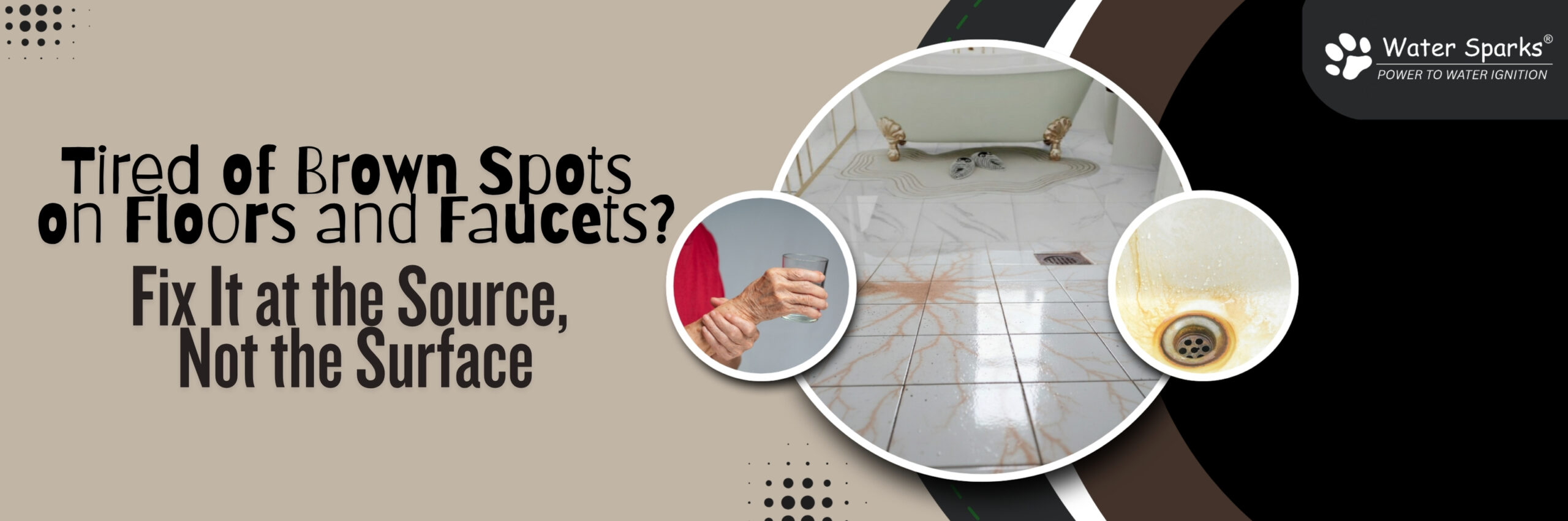
Tired of Brown Spots on Floors and Faucets? Fix It at the Source, Not the Surface
Brown spots on floors and faucets are a common problem in many homes, especially those using borewell water. No matter how often you scrub, mop, or use chemical cleaners, these stains keep coming back, leaving your home looking worn and dirty. The real issue isn’t poor cleaning, it’s the water itself. Iron stains in water and brown water problems caused by rusty borewell water slowly accumulate, damaging tiles, sinks, faucets, and even plumbing over time. The permanent solution lies in tackling the problem at the source with an iron removal plant, which removes iron from water before it reaches your taps, preventing further staining.
What Causes Brown Spots on Floors and Faucets?
Brown spots on faucets and floors typically result from excess iron content in your water. Rusty water marks are created when iron in water oxidizes upon reaction with air, resulting in reddish-brown deposits. The brown water issue is most commonly associated with rusty borewell water, which typically has a high dissolved iron content. As water runs through taps and pipes, these iron particles deposit on surfaces, leaving lasting brown spots on floors, sinks, and taps. These stains become increasingly difficult to remove over the years with regular cleaning. Having an iron removal system eliminates iron at the source before it reaches your home, preventing further damage and keeping your home clean and well-presented. [1]
Understanding Rusty Water Stains in Your Home
Rusty water stains are more than just a cosmetic nuisance; they are a sign of a broader water-quality issue. They may occur in bathrooms, kitchens, and laundry facilities, staining tiles, sinks, faucets, and even clothes with an orange-brown colour. Rusty borewell water coming through taps regularly creates brown water, rendering frequent cleaning practically useless. Rusty water spots may also rot metal fixtures if left unchecked over time and affect home appliances. Treating water at the source with an Iron removal system ensures iron is removed before it reaches your home, preventing further staining and protecting your surfaces and appliances.
The Impact of a Brown Water Problem on Daily Life
A brown water problem can significantly disrupt daily routines. Washing clothes in water with high iron content can cause yellowing or dulling, while brown tap water can alter the taste of drinking water and affect cooking. Iron stains in water leave floors, sinks, and faucets looking unsightly, no matter how often you clean. Over time, rust can even shorten the lifespan of plumbing fixtures and appliances. Using an iron removal system to treat rusty borewell water not only solves these issues but also ensures a steady supply of clean, safe water, making everyday life easier and more hygienic. [2]
Why Rusty Borewell Water Leads to Persistent Stains
Rusty borewell water is the primary source of ongoing Rust Stains on Floors and faucets. This water contains dissolved iron, which reacts with oxygen to form rust particles that settle on surfaces as rusty water stains. Brown water problems caused by Rust-stained borewell water are not limited to aesthetics; they can also corrode taps, pipelines, and appliances. Addressing the problem at the source with an iron removal system prevents these stains from forming in the first place. Treating the water before it enters your home is the most effective way to stop Rust Stains on Floors and faucets from returning.
Health and Appliance Risks from Rusty Water Stains
Rusty water stains aren’t just a visual problem; they can impact your health and household appliances. Drinking brown water may give it a metallic taste and make it unappealing, while using it for cooking can affect the flavour of food. Rusty borewell water also creates brown spots on sinks and floors, corrodes taps, and, in the long run, ruins washing machines and dishwashers. An Iron removal system removes iron from water before it enters your home, preventing Iron stains in water and protecting your family and your precious appliances.
How an Iron Removal Plant Solves Brown Water Problems
An iron removal plant is the most effective solution for brown water problems in homes with Rust-stained borewell water. Filtering out iron at the source prevents rusty water stains and stops Rust Stains on Floors, sinks, and faucets. Treating water at the source ensures that all water flowing through your home is clean, safe, and free from iron particles. Installing an iron removal plant is a long-term solution that protects your household from recurring staining, reduces appliance damage, and maintains your home’s aesthetic appeal. [3]
Choosing the Right Iron Removal Plant for Your Home
Choosing the proper iron removal plant depends on your water supply and the iron level in your water. Rusty well water needs an iron-removal plant that effectively removes dissolved and particulate iron. An adequately sized Iron removal system avoids brown water issues and reduces rusty water marks. Choosing a system also involves considerations such as water volume, maintenance, and flow rate to avoid the return of brown spots on floors and faucets. A high-quality Iron removal system provides a permanent solution, keeping your home free of rusty water stains and brown water. [4]
Preventing Brown Spots on Floors with Effective Water Treatment
Once an iron removal plant is installed, brown spots on floors and faucets can become a problem of the past. Iron stains in water no longer appear, and brown water problems are effectively managed at the source. Routine maintenance of the Iron removal system ensures consistent water quality, protecting your home from future staining. Treating Rust-stained borewell water before it supplies water to your taps, floors, sinks, and faucets keeps them clean, safe, and pleasing to the eye. With an Iron removal system, you can have clear, iron-free water in your entire home and bid farewell to brown spots forever.