
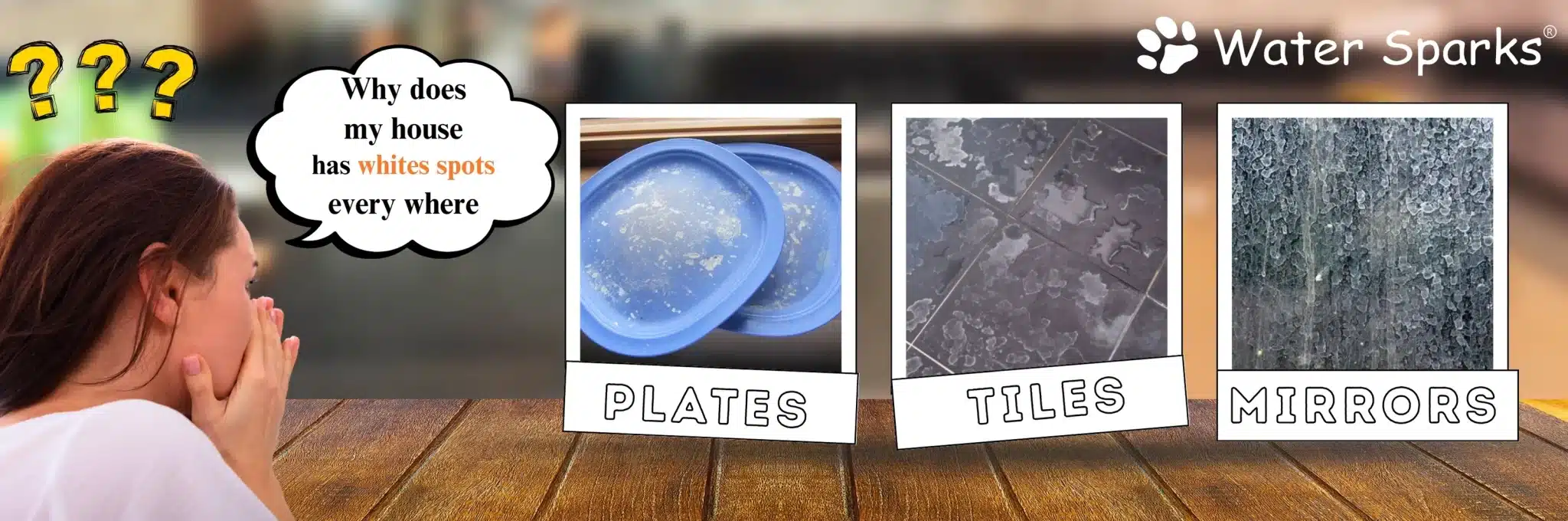
Why Do You See White Spots on Plates, Tiles, and Mirrors?
Have you been noticing white stains on plates, white stains in bathroom, or white marks on utensils that just won’t go away, no matter how much you clean? These are not just cosmetic issues—they’re clear signs of an underlying water problem in your home. The water you use every day might be leaving behind mineral deposits that stick to surfaces once the water evaporates. Over time, these marks can leave your kitchenware looking cloudy, your bathroom tiles looking dull, and your mirrors constantly foggy or streaked. Identifying the source of these stains is the first step toward restoring the cleanliness and shine your home deserves.
What Causes White Spots on Plates and Utensils?
White spots on plates are one of the first signs of mineral-heavy water or hard water. These spots form when hard water dries, leaving behind calcium and magnesium deposits. Over time, this results in white marks on utensils and glassware, even after proper washing. These spots are not unhealthy but make your dishes look dirty and dull. In most situations, the residue also influences surface texture, causing it to become rough or grainy to the touch. If left unchecked, these stains can accumulate and be difficult to remove, taking more time, energy, and cleaning solutions just to keep things moderately clean. [1]
White Marks on Utensils: Why They Keep Coming Back
Ever notice your washed dishes don’t gleam? That’s because white marks on utensils are due to dissolved minerals in hard water. The spots themselves might not be a health concern, but they indicate serious hard water issues at home, from kitchen items to personal hygiene. The leftover residue can make just-washed dishes appear dirty or unkempt. Eventually, you may see that soaps and detergents also do not come off as quickly, leaving a residue film. This not only affects the aesthetic look of your utensils but also lowers confidence in their being clean while eating or food preparation. And while these signs may seem small, they all point to one major culprit, hard water, and the damage it causes goes far beyond just your utensils.
Another Major Sign of Hard Water is White Stains in Bathrooms
White stains in bathroom tiles, faucets, and glass walls have their origin in the same minerals that cause white stains on plates. These types of stains set hard and become stubborn if not treated. They begin as spots or dull streaks but soon accumulate into thick white chalky layers that are resistant to normal cleaning. On glass surfaces, these deposits can create a permanent foggy appearance, reducing clarity and shine. Over time, the accumulation can also lead to clogged fixtures, reduced water flow, and an overall worn-out look in bathrooms. What begins as a small problem can quickly impact both functionality and appearance if not addressed in time. [2]
Hard Water Problems at Home: What You Should Know
One of the less obvious but serious concerns is the impact of hard water on personal health. Constant exposure to mineral-rich water can lead to dry skin, itchy scalp, and frizzy, unmanageable hair. Many people also report worsening of skin conditions like eczema or irritation after bathing. The excess calcium and magnesium in hard water don’t rinse off easily, leaving behind residue that clogs pores and interferes with soap and shampoo effectiveness. Over time, this can cause discomfort, recurring skin issues, and even affect your confidence. For households with sensitive skin or children, untreated hard water may quietly become a daily health irritant. [3]
How Hard Water Problems at Home Affect Daily Cleaning
Whether you’re cleaning the kitchen or bathroom, hard water problems at home make it more difficult. White marks on plates come back again and again, white marks on cutlery won’t go away, and white stains in bathroom tiles need constant scrubbing. Glass panels, taps, and other hard surfaces often end up with patchy white stains that dull their appearance. Regular cleaning becomes annoying and time-consuming, as surfaces never really appear clean. The endless buildup of residue means you’re actually using more cleaning products, more water, and more effort just to keep a minimum level of hygiene. Over time, this can wear out surfaces and reduce the overall appearance of your home, making cleaning feel like an endless, unrewarding chore. [4]
Why Your Water Might Be Ruining Your Skin and Hair
If your skin feels dry after every shower or your hair stays frizzy no matter what products you use, the water in your bathroom could be to blame. When water contains excess minerals or impurities, it doesn’t rinse off soap and shampoo easily. This leaves behind a residue that irritates the skin and roughens up the hair. Over time, you might notice persistent itchiness, flakiness, or brittle hair that’s hard to manage. These everyday discomforts are often overlooked but are direct signs that the water you’re using needs attention. Solving this water quality issue can bring noticeable relief and restore comfort to your daily routines.
How to Prevent Hard Water Damages
The cure for hardwater is installing a water softener. It softens the water before it gets to your faucets, stopping white spots on plates, white streaks in the bathroom, and white marks on utensils. Though DIY repairs temporarily solve the issue, a water softener offers a long-term fix. It does so by eliminating the minerals that cause the buildup, making sure the water circulating within your home is kinder to surfaces and appliances.
Unlike short-term solutions like vinegar rinses or abrasive scrubbing agents, a softener treats the source and not just the symptom. In the long run, this not only enhances cleanliness but also minimizes wear and tear on your appliances and fixtures, resulting in greater efficiency and less maintenance cost.
How a Water Softener Is the Best Cure for Hardwater Issues
A water softener keeps your house away from all these frequent hard water problems at home. It removes the very cause of white stains in bathroom, white spots on utensils, and white spots on plates. If you are experiencing frequent hard water in your house, it’s time to act with a cure for hardwater that truly lasts. By solving the problem at its root, a water softener offers a reliable cure for hardwater that not only makes your house cleaner but also improves the efficiency of appliances, plumbing, and even your personal grooming routine. Over time, you’ll notice shinier surfaces, cleaner dishes, and softer laundry—all with less effort. Choosing a cure for hardwater like a water softener is a practical upgrade that delivers visible, lasting results throughout your home.