
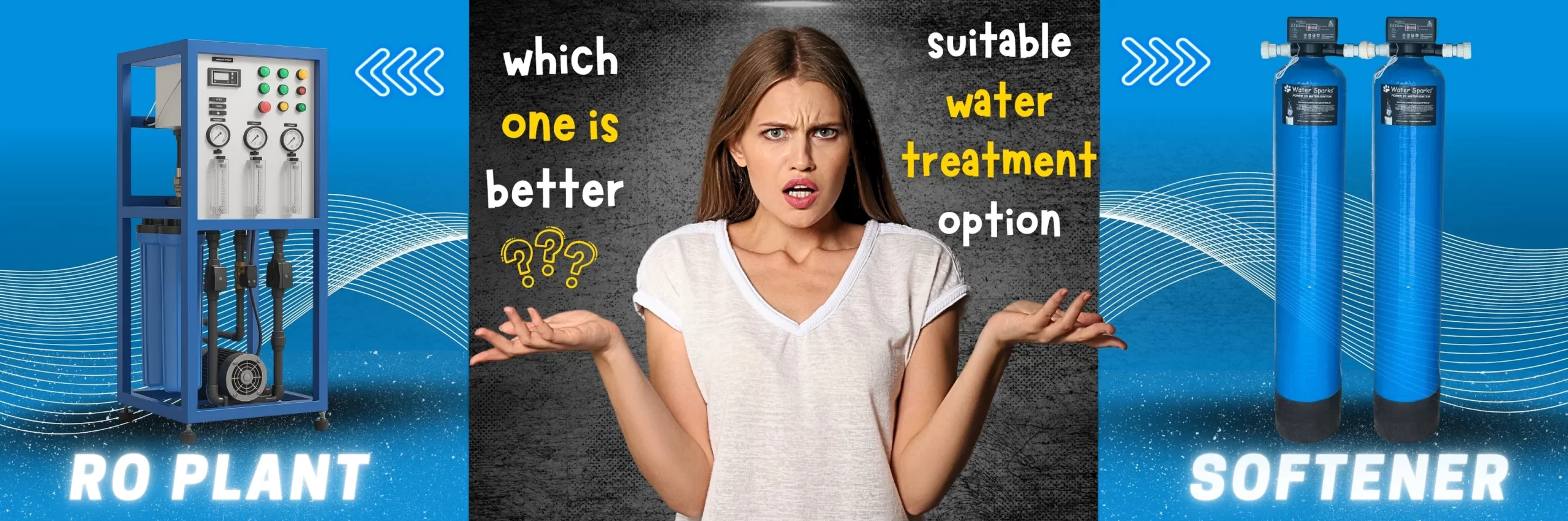
Choosing Between Whole House RO Plant and Water Softener – A Complete Breakdown
Water quality plays a major role in both health and household maintenance. Many homes struggle with the need for hard water treatment or high TDS in borewell water, while others face the problem of a salty taste in their drinking water. This is where deciding between a Whole House RO plant and a water softener becomes important. Both play special functions, and what they are depends on the needs at hand.
Dirty water not only poses health problems but also harms household appliances and plumbing fixtures. Eventually, untreated water can cause scaling, staining, and decreased equipment efficiency over time, eventually driving up maintenance costs for families.
By investing in the proper system, families can achieve long-term advantages. Whether it is purer, healthier drinking water or prevention of staining and scaling, either option provides significant enhancement to everyday life. The key lies in identifying your primary concern and matching it with the right treatment solution.
What is an RO Plant and How Does It Work?
A Whole-House RO plant is a water purification system that utilises reverse osmosis technology to remove dissolved salts, chemicals, and impurities. It is especially useful when dealing with high TDS in borewell water or a salty taste in drinking water, ensuring safe and healthy consumption.
The RO plant pushes water through a semi-permeable membrane, filtering out impurities and reducing excess minerals. This system is particularly important for households that prioritize safe drinking water over hard water treatment for bathing or washing.
Over the years, the technology behind these systems has improved, making them more efficient and reliable. Modern designs prioritise achieving higher water recovery rates and minimising waste, resulting in both eco-friendly and cost-effective solutions in the long run.
Additionally, many households prefer this system because of its consistency. Regardless of seasonal changes or varying water sources, the process consistently delivers the same level of purity, providing families with peace of mind about the water they consume every day. [1]
What is a Water Softener and How Does It Work?
A Whole House water softener is designed specifically for hard water treatment by removing calcium and magnesium ions. Unlike an RO plant, it doesn’t make water fit for drinking but ensures soft water for bathing, washing, and cleaning.
By using ion-exchange resins, a water softener prevents issues like white stains on tiles, scale formation in dishwasher, and dry skin. For homes with hard water treatment problems, installing a water softener ensures long-term comfort and protection of appliances.
Over time, the consistent use of a water softener helps extend the lifespan of household plumbing systems, geysers, and washing machines. By reducing scale buildup, it minimizes the need for frequent repairs or replacements.
Another advantage is the improvement in day-to-day living. Soap lathers better, clothes feel softer after washing, and surfaces stay cleaner without the need for constant scrubbing, making household chores easier and more efficient.
Key Differences Between RO Plant and Water Softener
The major distinction lies in purpose. A Whole House RO plant is best for reducing high TDS in borewell water and removing a salty taste in drinking water. A Whole House water softener, on the other hand, is primarily for hard water treatment to prevent problems such as white stains on tiles and dry skin after bath.
A key point to note is that a water softener is not effective when the TDS level goes beyond 600 ppm. In such cases, only an RO plant can handle the purification process effectively and ensure safe water. This makes the RO system more versatile when dealing with borewell water or high-salinity water.
While both improve water quality, they target different concerns. An RO plant ensures safe, purified drinking water, while a water softener provides better utility water for daily use.
This difference makes it crucial for homeowners to carefully evaluate their water issues before investing in a solution. Choosing the wrong system can leave unresolved issues, leading to frustration and additional costs later.
In many cases, households benefit from a combination of both systems. With an RO plant handling drinking water needs and a water softener managing hard water issues, families enjoy complete protection and convenience. [2]
When Should You Choose an RO Plant for Home?
If your household water has high TDS in borewell water or a salty taste in drinking water, a Whole House RO plant is the ideal choice. It eliminates harmful salts and provides clean, safe water for drinking and cooking.
Families with health concerns, such as kidney issues, salt-induced acidity, or children sensitive to impurities, will benefit the most from an RO plant. Unlike a Whole House water softener, it directly addresses drinking water quality rather than hard water treatment.
Another important benefit is that an RO plant eliminates all types of dissolved salts, including calcium and magnesium, which are the primary contributors to water hardness. This renders RO not only useful for salty water but also a dependable measure for addressing hardness issues that an individual softener might not be able to completely eliminate.
Another significant consideration is the long-term effect on lifestyle. With daily purified water, cooking, preparing drinks, and even preparing children’s meals become safer and more consistent.
Apart from that, the regular provision of purified water can reduce reliance on bottled water, making it a cost-saving and environmentally friendly option for homes.
When Should You Install a Water Softener in for Home?
Homes experiencing white stains on tiles, scale formation in dishwasher, or dry skin after bath should consider a Whole House water softener. These issues are classic signs of hard water treatment requirements.
A water softener prevents damage to household appliances and helps reduce soap usage. Unlike an RO plant, it doesn’t remove a salty taste in drinking water, but it ensures that your home remains stain-free and comfortable.
It’s essential to note that many competitors claim their water softeners can work effectively up to 2500 ppm TDS; however, this is misleading. A water softener is not designed for such high TDS levels due to a phenomenon known as OBR (Output Between Regeneration). OBR refers to the treated water volume a softener can deliver before it requires regeneration. At very high TDS levels, the resin inside the softener becomes saturated too quickly, forcing frequent regenerations. This doesn’t solve the problem; instead, it leads to excessive salt consumption, operational inefficiency, and ultimately, poor water quality.
Over time, using a water softener helps reduce the frequency of repairs and replacements in plumbing lines, geysers, and washing machines. This makes it a practical investment for families struggling with repeated maintenance costs.
Moreover, softer water improves day-to-day living by making clothes feel fresher after washing and keeping bathroom fittings free from stubborn stains. These small but noticeable differences add up to create a more convenient household routine. [3]
RO Plant vs Water Softener: Cost, Maintenance, and Lifespan
The initial cost of a Whole House RO plant is higher due to its purification technology, especially when dealing with high TDS in borewell water. Regular maintenance includes filter replacements and membrane care.
A Whole House water softener is comparatively less expensive and easier to maintain. It mainly requires periodic resin recharging. While both systems add value, the choice depends on whether your main concern is salty taste in drinking water or hard water treatment problems like white stains on tiles and scale formation in dishwasher.
Health Benefits of RO Plant vs Water Softener
The Whole House RO plant offers direct health benefits by purifying water for drinking. It removes dissolved salts and prevents the negative effects of high TDS in borewell water. Families no longer need to worry about a salty taste in drinking water or health issues related to unsafe consumption.
A Whole House water softener, while not for drinking, helps indirectly. By preventing dry skin after bath and reducing irritation, it improves daily comfort. Soft water is gentler on hair and skin compared to untreated hard water.
In addition, clean drinking water from an RO plant supports overall well-being by reducing the risk of long-term health complications often linked to contaminated sources. It ensures that every glass consumed contributes to a healthier lifestyle.
At the same time, a water softener enhances quality of life in subtle yet meaningful ways. From keeping laundry brighter to reducing soap residue on surfaces, the benefits extend throughout the household, making daily tasks easier and more pleasant. [4]
Which Is Best for Your Home: RO Plant or Water Softener?
If your primary concern is salty taste in drinking water or high TDS in borewell water, then a Whole House RO plant is the solution. But if your problems are white stains on tiles, dry skin after bath, or scale formation in dishwasher, a water softener is a better choice.
In many households, both systems are used in conjunction: the RO plant for producing safe drinking water and the Whole House water softener for effective treatment of hard water. Selecting the right system ensures the long-term health, comfort, and protection of your family and home.
Making the right choice also depends on the source of your water supply. Borewell, municipal, and tanker water all have different problems, so inspecting water quality prior to making the decision saves unnecessary costs.
Ultimately, the key to finding the most suitable solution is striking a balance between household comfort and health requirements. Regardless of whether you choose to use one system or both, water treatment investment provides peace of mind and improved living standards for the entire family.