
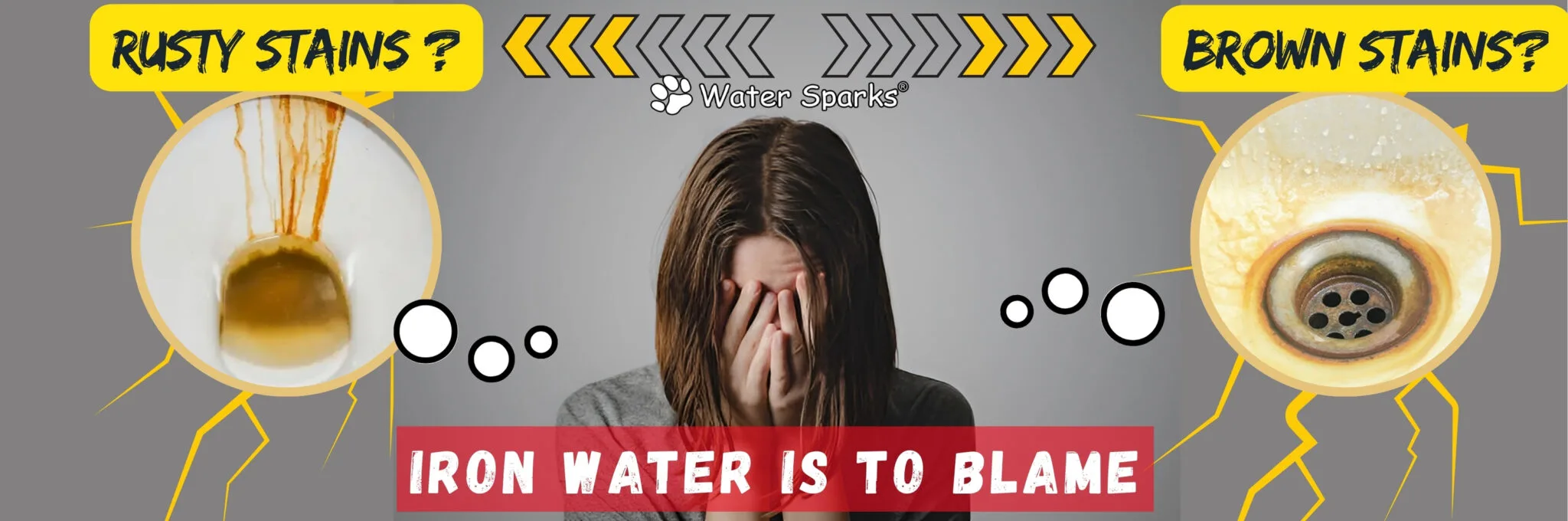
Brown Water from the Tap? Here’s What Could Be Causing It.
Iron-contaminated water contains high levels of iron, often due to underground sources or corrosion in old, rusty pipes. This can give the water an orange or brown tint, a metallic taste, and lead to staining on sinks, toilets, and laundry. It may also produce unpleasant odors or slimy residue. While not typically harmful to drink, excessive iron can clog pipes and reduce the efficiency of appliances, making timely treatment essential.
Why Does Water Taste Like Iron?
Water passing through iron-rich soil and rocks may pick up iron, particularly in well water. This is usually responsible for a metallic taste that so many folks experience when drinking or cooking with tap water.[4]
Why Does Clear Water Turn Brown After Some Time?
Iron bacteria could be why your clean water becomes brown afterwards. These microscopic creatures live on iron in the water and create slimy buildup in pipes, causing odors, rusty residue, and stains in your household.[8]
If your tap water is brown in color and has a rusty smell, it may be the result of external iron contamination.[3]. Runoff from local factories or farms may bring iron into your water supply system, leading to discoloration and foul smells.
how does iron bacteria help in clear water turning into brown water
Iron bacteria are microorganisms that oxidize dissolved iron (Fe²⁺) in water, turning it into solid iron compounds like ferric hydroxide (Fe(OH)₃). This process creates a reddish-brown slime or sediment, which can discolor the water, giving it a brown or rusty appearance. These bacteria thrive in environments where iron and oxygen are present, such as groundwater, wells, or plumbing systems. As they grow, they form slimy biofilms and produce a distinctive metallic or musty odor. The brown discoloration caused by iron bacteria is often seen in toilet tanks, sinks, and water storage systems, and can lead to staining and unpleasant water quality.[8]
Water Tastes Like Iron? Here’s Why That’s a Problem
If your water tastes like you licked a rusty spoon, you’re probably dealing with iron. It usually gets there when water travels through iron-rich soil, rocks, or old, corroded pipes. This metallic taste is super common in well water or homes with aging plumbing. And sometimes, iron bacteria can join the party making your water taste weird and smell off. Not exactly what you want when you’re just trying to stay hydrated.
Water Tastes Like Iron and Smells Rusty
If your water tastes like metal and has that weird rusty smell, you’re probably dealing with too much iron or even iron bacteria. And it’s not just about the taste. Iron in your water can leave stubborn orange or brown stains on your toilets, sinks, tubs, and even your laundry. Over time, clear water can turn brown, pipes can clog, and appliances like your washing machine or water heater can start acting up (or worse, break down).
How to Get Rid of That Rusty Smell in Your Water?
Say goodbye to rusty stains on toilets
If your water tastes like iron or has a rusty smell, an iron removal plant will eliminate that with the removal of the iron, providing you with clean, fresh water without the unpleasant taste or smell. An iron removal plant stops rusty stains on toilets, tubs, and sinks by removing the iron that creates these pesky, embarrassing stain Iron in water can discolor clothing and make laundry appear dingy. Having an iron filter maintains your laundry clean, odor-free, and free of brown water stains.[2]
An iron removal plant eliminates brown, rust-odored water, creating a long-lasting solution that ensures your home is safeguarded from iron issues.[9]